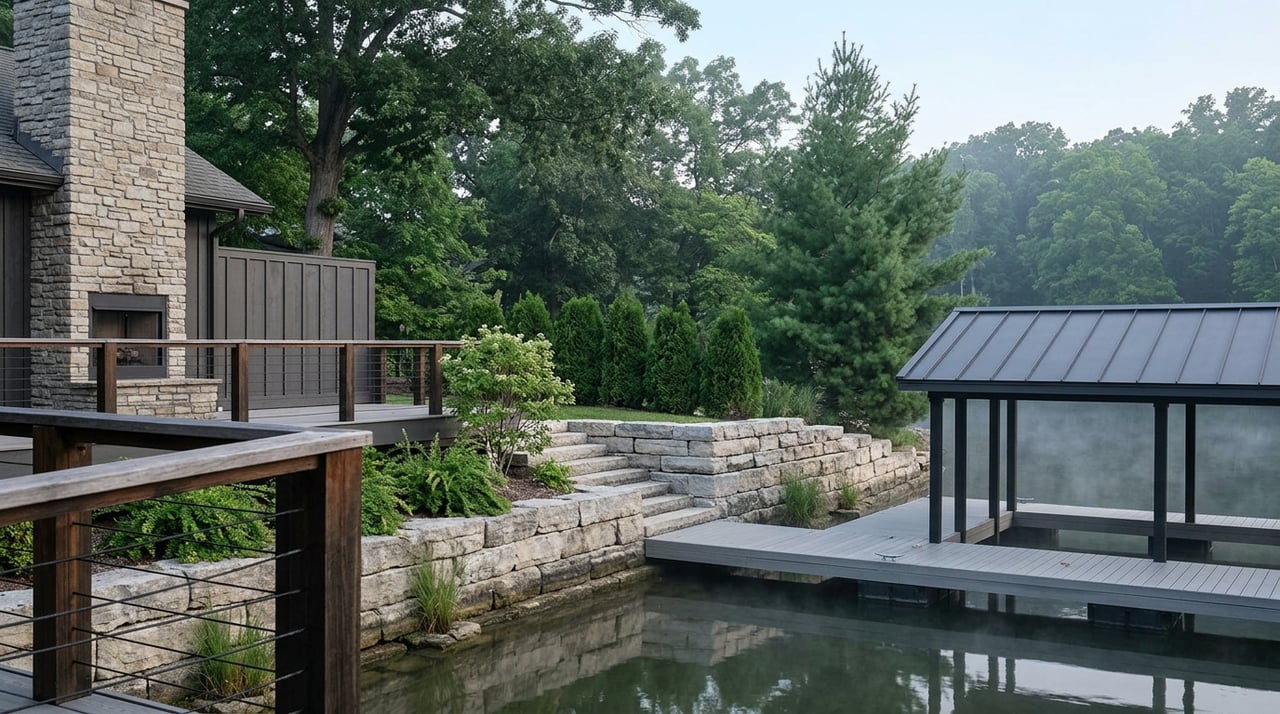
Why Your Camdenton Dock Permit Doesn't Just Come With the House
September 17, 2026
September 17, 2026
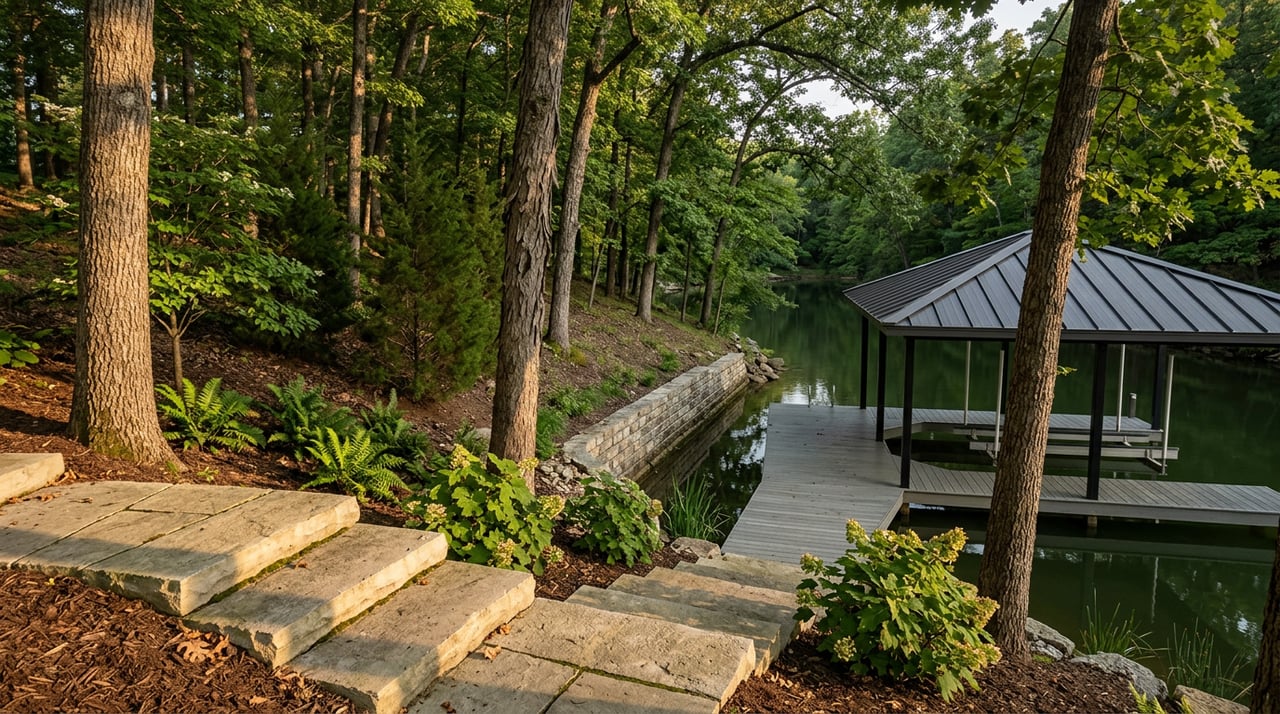
You found the house. The dock is already there, tucked into a quiet cove off the Big Niangua, complete with a covered slip and a lift that looks barely used. The listing says the dock conveys. Your contract says the dock conveys. As far as the deed is concerned, that's true.
As far as Ameren Missouri is concerned, it isn't.
The dock at Lake of the Ozarks sits on shoreline that Ameren owns and manages under a federal license, not on land the homeowner controls outright. That means the physical dock might change hands the moment you close, but the permit that legally allows it to exist there does not. It has to be transferred on a separate track, with its own paperwork, its own timeline, and in a lot of Camdenton's cove neighborhoods, its own fire district sign-off. Buyers who assume the dock is simply part of the house are the ones who end up calling their agent three weeks after closing asking why Ameren is emailing them about a permit application.
A standard closing transfers real property. The deed records at the Camden County Recorder of Deeds office in Camdenton, and that's the end of it for the house.
The dock runs on a different rail entirely. Ameren Missouri requires the new owner to submit a formal transfer application, and for any sale that includes an existing dock or breakwater, that application has to include a certification and inspection report. The paperwork isn't a formality that gets rubber stamped. It's a real review, and it needs a few specific pieces in place before Ameren will act on it.
Here's what the transfer application actually requires:
| Requirement | What It Involves |
|---|---|
| Application | Submitted through Ameren's online permitting portal after ownership changes |
| Processing fee | Paid at the time of application |
| Deed showing ownership | Proof the sale has recorded |
| Approved electrical inspection | Required where applicable, see below |
That third item is where most buyers assume the process ends. It doesn't. The fourth item is where Camdenton transactions specifically get complicated.
Ameren's rules single out several fire protection districts around the lake where an extra step applies before a dock permit can transfer: Lake Ozark Fire Protection District, Mid County Fire District, Osage Beach Fire Protection District, Rocky Mount Fire Protection District, Sunrise Beach Fire Protection District, and Northwest Fire Protection District. If your property falls inside one of these boundaries, the electrical system on the dock has to be inspected and approved by that fire district before Ameren will finalize the transfer to the new owner.
Camdenton sits squarely inside Mid-County Fire Protection District territory. The district covers roughly 227 square miles of central Camden County and has provided fire and EMS service to the City of Camdenton under contract since October 1, 2016. Nearly every dock on the Big Niangua arm near town, and plenty further out along the district's coverage area, falls under this requirement.
The detail that catches people off guard is the clock attached to it. The electrical inspection has to have been completed and approved within the previous 12 months. A dock that was inspected two years ago, even if it passed with no issues, doesn't satisfy the requirement. If the seller's last inspection has aged out, someone has to schedule a new one before the transfer can move forward, and that's not always something a title company flags on its own.
This is also true for any dock served by electric power, separate from Ameren's own dock permit. The electrical permit is issued by the fire district, requires its own fee, and exists specifically because water, freezing, and thawing wear on dock wiring in ways that create real safety risk if left unchecked.
Ameren allows homeowners to authorize a realtor or a certified dock builder to help manage permits on their behalf, which sounds like it should smooth things out. It usually does, but there's one setup mistake that trips people up more often than it should.
If a realtor logs into their own Ameren account and applies for a permit transfer on a client's behalf from inside that account, the system registers the realtor as the permit holder, not the client. Ameren's own guidance is direct about this: applying from the wrong account means someone then has to file a second transfer application to move the permit into the correct name, adding delay and additional cost to a process that should have taken one step.
It's an easy error to make and an easy one to avoid, but only if whoever is handling the paperwork knows to set up the client's account first and apply from there, rather than from their own.
Ameren treats permit compliance seriously enough to back it with real penalties. Failing to obtain a required permit carries a $2,000 fee. Failing to comply with the conditions of an existing permit carries another $2,000 fee. Beyond that, Ameren can pursue attorney's fees and interest tied to enforcement if a dock or property owner doesn't sort out compliance issues.
For context on the other side of the ledger, a new dock permit runs $550, and becoming a certified dock builder costs $300 to apply, with a $100 annual renewal. Those numbers exist for people building or modifying docks from scratch. They're worth knowing because they show how much smaller the transfer process is by comparison, if it's handled correctly the first time. The $2,000 enforcement fee only comes into play when someone skips a step that would have cost far less to do right.
New construction or approved dock modifications have to be completed within one year of the permit being issued, with one possible six-month extension if nothing about the original application has changed. Other shoreline work, like bank stabilization, has a two-year window with no extension available. If a permit expires, it's void, and the whole application has to start over. None of that is unique to a sale, but it's useful context for anyone inheriting a dock permit that's sitting close to its deadline.
The cleanest way through this is to treat the dock permit as its own line item on the closing checklist, not an afterthought that happens after the deed records. In practice, that looks like:
None of these steps are difficult on their own. They just have to happen in the right order, and they rarely make it onto a standard closing checklist because they're specific to lakefront property here, not something every closing attorney or out-of-area lender is watching for.
Does the dock permit transfer automatically if I inherit the property instead of buying it? No. Ameren requires notification and a transfer application whenever ownership changes, regardless of how the transfer happens.
What if the seller already has a current electrical inspection? Then that piece of the requirement is already satisfied, and the transfer application can move forward without the extra step of scheduling a new one.
What happens if we close before the permit transfer is complete? The house sale itself isn't held up by this. But the new owner is technically operating a dock permit that hasn't been transferred into their name, which is the exact situation Ameren's enforcement fees exist to address. It's better to have the application in motion before closing day than to sort it out afterward.
Dock permits are a small piece of paper next to the size of a lakefront purchase, but they're the piece that determines whether you can actually use the water the way you pictured when you made the offer. If you're buying or selling on the Big Niangua, at Camdenton, or anywhere else around the lake where a dock is part of the deal, Rudloff Legacy Group can walk you through exactly what your specific property needs before it ever reaches the closing table. Contact us to talk through your timeline.
Stay up to date on the latest real estate trends.

Whether you're buying your first lake home, upgrading to a waterfront property, or preparing to sell, having experienced local guidance makes all the difference. Our team provides insider knowledge, personalized support, and access to the latest opportunities around Lake Ozark so you can move forward with confidence.

Rudloff Legacy Group
2935 Bagnell Dam Blvd Ste 214 Lake Ozark, MO 65049 Office Address: 800 E 101st Terr, Ste 350 Kansas City, MO 64131