In Osage Beach, The Smartest Rental Investment Isn't On The Water
October 1, 2026
October 1, 2026
Ask three different sources what a home costs in Osage Beach right now and you'll get three different answers, and none of them are wrong. Zillow's home value index put the citywide average at $322,995 for the year ending July 2026, down 6.8 percent from the year before. Pull up waterfront-only listings through the MLS feed and the median asking price as of mid-July 2026 was $390,000. Check the broader active-listing pool in September 2026 and the citywide median sits at $389,000, with homes spending a median of 95 days on market before going under contract. Meanwhile, plenty of listing-search pages that average whatever happens to be live at any given moment land north of $790,000, a figure pulled upward by the handful of one-of-a-kind lakefront estates that always sit in Osage Beach's inventory.
None of these numbers are lying to you. They're measuring different towns that happen to share a zip code.
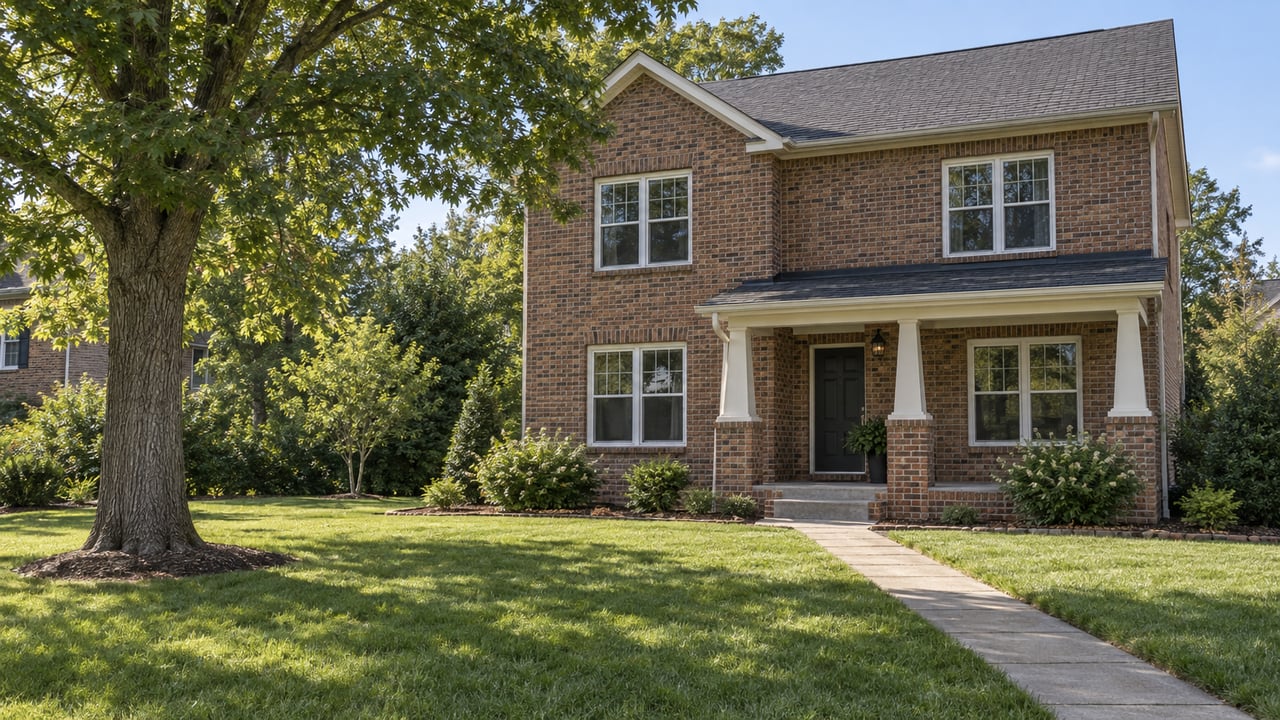
Osage Beach splits cleanly along Highway 54, with the Grand Glaize Bridge acting as the hinge between two markets that behave nothing alike. On one side is the postcard version: main channel views, private docks, condos and estates that compete for nightly vacation-rental dollars every summer. On the other side, inland along the Highway 54 corridor, sits a different kind of demand entirely, anchored by Lake Regional Health System's hospital campus at 54 Hospital Drive and the cluster of clinics and medical offices on Nichols Road and Medical Park Drive. That corridor also holds the Osage Beach Premium Outlets, the retail engine that keeps the inland strip busy well outside boating season.
For a full-time family or a retiree, this split mostly shows up as a choice between a longer commute to the water and a shorter one to a grocery store. For an investor, it's the whole ballgame.
Lenders who write DSCR loans, debt-service coverage ratio financing that qualifies a property on its own projected rental income rather than the buyer's personal income, have started treating Osage Beach as two distinct plays. The lakefront condo with the boat slip is the obvious pitch: high nightly rates in July, a long stretch of slower months, and a rental calendar that lives and dies by the tourist season. The corridor near the hospital is a quieter proposition. Furnished mid-term rentals there, the kind used by traveling clinicians, contractors on local expansion projects, and family members staying near a patient for weeks at a time, tend to command rents above what a standard unfurnished workforce apartment would fetch in the same stretch of road. That demand doesn't spike in June and vanish in October. It runs year-round, tied to hospital staffing and patient volume rather than lake levels.
That's the part the median price can't tell you. A $390,000 waterfront condo and a $320,000 inland property near the hospital corridor aren't competing for the same tenant, the same season, or the same insurance exposure, and treating them as the same asset class because they're both technically in Osage Beach is where a lot of first-time lake investors get their numbers wrong.
Missouri sits inside Tornado Alley, and that fact shapes what a condo purchase actually costs to hold, regardless of which side of the bridge it's on. Standard HO-6 condo insurance in Missouri runs $450 to $900 a year for the unit owner's own policy, but the number that matters more for a lakefront building is the master policy the association carries. Many associations in wind and hail-prone regions now carry percentage-based deductibles, often 1 to 2 percent of the insured building value, rather than a flat dollar amount. On a $10 million building, a 1 percent deductible is $100,000, and that bill gets spread across unit owners as a special assessment the moment a storm causes covered damage.
A standalone or smaller multi-unit property near the hospital corridor still carries the same statewide tornado exposure, but it isn't sharing a single large master policy with dozens of other owners in a high-value lakefront structure. That difference doesn't show up in a listing price. It shows up eighteen months later in a mailbox.
A few other differences worth knowing before comparing two Osage Beach properties side by side:
| Lakefront condo | Inland, hospital-corridor property | |
|---|---|---|
| Typical buyer motivation | Nightly vacation rental, personal use in the off-season | Furnished mid-term rental to healthcare staff, contractors, or visiting family |
| Price sensitivity | Tied to dock access, view, and cove position | Tied to proximity to Lake Regional Health System and the outlet corridor |
| Seasonality | Strong summer peak, softer shoulder months | Steadier occupancy tied to hospital staffing and patient volume |
| Shared insurance risk | Often part of a large association master policy with percentage-based wind/hail deductibles | Typically smaller shared exposure, same statewide tornado risk |
| Flood exposure | Higher, given water frontage | Lower, though site-specific flood maps still matter |
Neither column is the wrong answer. A lakefront condo can still be the right purchase for someone who wants to use it themselves three weeks a year and rent it the rest of the time. The point is that the two properties don't belong on the same spreadsheet, and a buyer who runs both through the same set of assumptions will misjudge one of them.
The ZHVI drop of 6.8 percent over the year ending July 2026, paired with a 95-day median time on market as of September 2026, suggests the overall Osage Beach market has softened somewhat compared to a year ago. That's useful context, but it's citywide, and citywide numbers blur the same two markets described above. Before underwriting either type of property, it's worth pulling the specific comparable sales for that corridor rather than leaning on any single aggregated figure, checking with the association directly on reserve funding and past special assessment history if the property is a condo, and confirming the parcel's flood zone designation regardless of how far it sits from the water.
Does a DSCR loan work the same way for a hospital-corridor rental as it does for a lakefront one? The underlying mechanics are the same. Qualification is based on the property's projected rental income against its full monthly obligation, principal, interest, taxes, insurance, and HOA dues, rather than the borrower's personal income. What changes is the documentation a lender wants to see for market rent, since a furnished mid-term rental and a nightly vacation rental get appraised against different comparable data sets.
If a property isn't on the water, does flood insurance still matter? Yes. Standard HO-6 coverage excludes flood damage on either side of the bridge, and proximity to the lake is only one factor in a property's actual flood zone designation. The parcel's specific flood map determination matters more than how far it sits from the shoreline.
If you're weighing a purchase in Osage Beach with rental income in mind, the honest first step is figuring out which of these two markets the specific property actually belongs to, not what the citywide median says it should cost. Rudloff Legacy Group works both sides of that line regularly and can walk through the comparables, the association's insurance history, and the rental math for a specific address before you make an offer.
Stay up to date on the latest real estate trends.
Whether you're buying your first lake home, upgrading to a waterfront property, or preparing to sell, having experienced local guidance makes all the difference. Our team provides insider knowledge, personalized support, and access to the latest opportunities around Lake Ozark so you can move forward with confidence.
Rudloff Legacy Group
2935 Bagnell Dam Blvd Ste 214 Lake Ozark, MO 65049 Office Address: 800 E 101st Terr, Ste 350 Kansas City, MO 64131